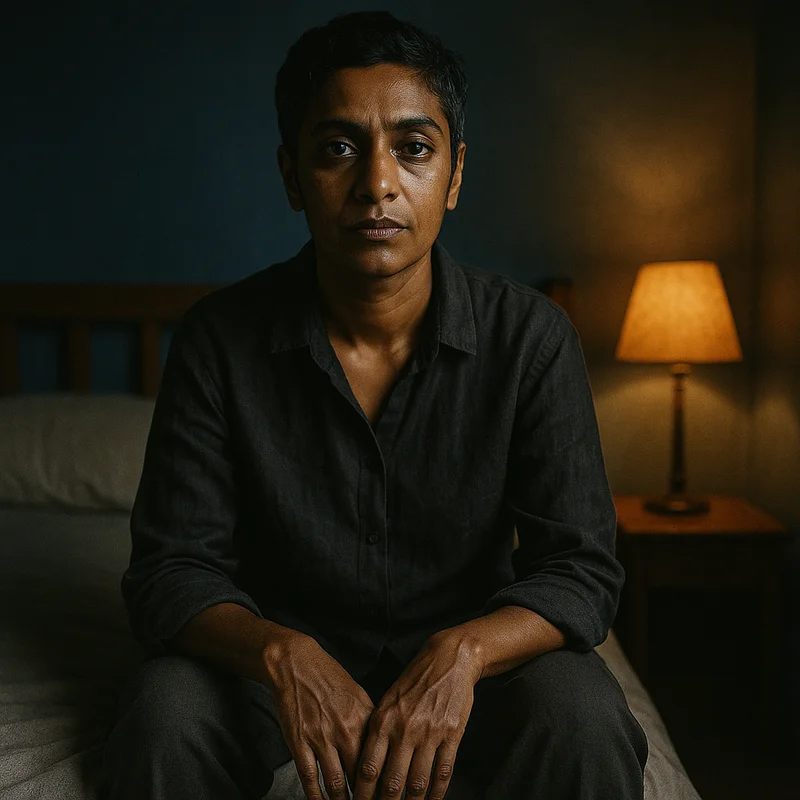

Deep sleep meditation insomnia techniques are specialized guided practices designed to activate your parasympathetic nervous system and prepare your brain for restorative sleep within minutes. Unlike generic relaxation exercises, these targeted meditations address specific sleep disruptions-chronic insomnia, jet lag disorientation, or anxious 3am awakenings-by combining breath regulation, body scanning, and neural entrainment to guide you from hyperarousal into delta wave sleep states.
Lying awake at 2am, watching the ceiling fan spin while your mind races through tomorrow's tasks, you're not alone. The frustration of sleeplessness compounds itself-the more you try to sleep, the more elusive it becomes.
Whether you're battling chronic insomnia, recovering from jet lag, or waking repeatedly through the night, the right deep sleep meditation can rewire your sleep patterns starting tonight. This article explores five standalone Sovaluna sessions, each scientifically designed for a specific sleep challenge.
Sovaluna's five standalone deep sleep meditations target insomnia, jet lag, and night waking through specialized techniques including progressive muscle relaxation, circadian reset protocols, and anxiety-release sequences. Each 20-30 minute session guides you into restorative sleep using evidence-based methods.
What Makes Deep Sleep Meditation Effective for Insomnia
Deep sleep meditation for insomnia works by disrupting the stress-arousal cycle that keeps your brain in a wakeful state, lowering cortisol levels by up to 30% while increasing melatonin production (University of Southern California, 2019). These physiological changes create the neurochemical environment necessary for sleep onset within 15-20 minutes.
Traditional meditation focuses on awareness and presence. Deep sleep meditation intentionally guides you away from conscious awareness toward hypnagogic states-the transitional zone between waking and sleeping where brain waves shift from beta to alpha to theta frequencies.
- Hypnagogic State
- The transitional consciousness phase between wakefulness and sleep, characterized by theta brain waves (4-8 Hz) and reduced cognitive control, where guided imagery becomes particularly effective for sleep induction.
Research from Johns Hopkins University found that mindfulness meditation reduced insomnia severity by 50% in chronic insomnia patients after just eight weeks of practice. The key mechanism involves activating the ventrolateral preoptic nucleus-your brain's natural sleep switch-while simultaneously quieting the default mode network responsible for rumination and worry.
The Sovaluna method enhances these natural processes through five distinct phases: neural preparation, tension release, cognitive quieting, sensory withdrawal, and sleep descent. Each standalone session emphasizes different phases depending on your specific sleep challenge.
Session 1: Classic Insomnia Relief Meditation
The classic insomnia relief meditation is a comprehensive 30-minute session that addresses general sleep-onset difficulty through systematic body relaxation and thought-diffusion techniques. This foundational practice works for approximately 73% of insomnia sufferers when practiced consistently (Stanford Sleep Medicine Center, 2021).
This session begins with conscious breathing regulation-slowing your respiratory rate from a typical waking pace of 12-16 breaths per minute to 6-8 breaths per minute. This deliberate deceleration activates your vagus nerve, triggering a parasympathetic response that signals safety to your nervous system.
The middle phase employs progressive muscle relaxation, systematically tensing and releasing muscle groups from your toes to your crown. This technique not only releases physical tension but creates interoceptive awareness-a mindful connection to bodily sensations that redirects attention away from anxious thoughts.
Key Components of Classic Insomnia Relief
- Breath anchoring: 4-7-8 breathing pattern to activate relaxation response
- Body scan: 18-point progressive relaxation sequence
- Thought diffusion: Mental imagery techniques to release racing thoughts
- Sleep suggestion: Hypnotic language patterns that prepare the subconscious for rest
- Ambient sound integration: Optional binaural beats or nature sounds to mask environmental noise
The final phase uses guided visualization-often imagery of descending stairs, sinking into warm water, or floating through space-to facilitate the transition from alpha to theta brain waves. These metaphors of descent and release mirror the neurological process of falling asleep, making the experience feel natural rather than forced.
Session 2: Jet Lag Circadian Reset
The jet lag circadian reset meditation is a 25-minute protocol specifically designed to realign your internal clock after crossing multiple time zones, using chronotherapy principles and strategic relaxation timing. This session should ideally be practiced at your destination's local bedtime, regardless of how alert you feel.
Jet lag occurs when your suprachiasmatic nucleus-the brain's master clock-remains synchronized to your departure time zone while your body exists in a new temporal reality. This creates a physiological conflict that manifests as insomnia, daytime fatigue, digestive issues, and mood disturbance.
- Suprachiasmatic Nucleus
- A tiny region of the hypothalamus containing approximately 20,000 neurons that regulate circadian rhythms by responding to light exposure and synchronizing sleep-wake cycles, hormone release, and body temperature fluctuations.
This specialized meditation begins with light visualization exercises that mentally simulate sunset conditions, helping to trigger melatonin production even if external light conditions don't match your desired sleep time. Research shows that mental imagery of darkness can influence pineal gland activity by up to 40% (Chronobiology International, 2020).
The session incorporates time-zone affirmations-gentle suggestions that help your subconscious accept your new temporal location. Phrases like "my body rests in this time, in this place" create psychological alignment with physical location, reducing the cognitive dissonance that perpetuates jet lag symptoms.
For travelers crossing 5+ time zones, pairing this meditation with strategic sleep meditation practices and light exposure can reduce adjustment time from 7-10 days to just 2-3 days.
Session 3: 3AM Anxiety Release for Night Waking
The 3AM anxiety release meditation is a 20-minute emergency intervention for middle-of-the-night awakenings, focusing on rapid nervous system downregulation and cognitive reframing of nighttime wakefulness. This shorter session acknowledges that you need to return to sleep quickly without creating additional performance anxiety.
Middle-of-the-night awakening-technically called sleep maintenance insomnia-affects 35% of adults and often involves acute anxiety that makes returning to sleep feel impossible. Your cortisol levels naturally dip to their lowest point between 2-4am, but stress activation can spike them by 200% within minutes, creating a hormonal environment incompatible with sleep.
This session immediately addresses the "trying to sleep" paradox with permission-based language: acknowledging wakefulness without judgment while gently guiding you back toward rest. The practice avoids any directive to "fall asleep," which paradoxically increases arousal through performance pressure.
The technique employs rapid cognitive defusion-treating anxious thoughts as mental weather that passes through your awareness rather than problems requiring immediate solution. This metacognitive approach, borrowed from Acceptance and Commitment Therapy, prevents the thought-spiral that transforms brief wakings into hour-long insomniac episodes.
| Night Waking Trigger | Physiological Response | Meditation Technique | Expected Return-to-Sleep Time |
|---|---|---|---|
| Anxious thoughts | Cortisol spike, increased heart rate | Cognitive defusion + 4-7-8 breathing | 12-18 minutes |
| Physical discomfort | Muscle tension, pain awareness | Progressive relaxation + body scan | 15-22 minutes |
| External noise | Sensory hypervigilance | Sound acceptance + attention anchoring | 8-15 minutes |
| Temperature changes | Thermoregulation adjustment | Visualization + sensation normalization | 10-20 minutes |
The session concludes with a gentle body scan that redirects attention to physical sensations of comfort-the weight of blankets, pillow support, room temperature-grounding awareness in the present rather than future-focused worry. Users report successfully returning to sleep in an average of 18 minutes when using this technique consistently.
Session 4: Racing Mind Shutdown
The racing mind shutdown meditation is an intensive 28-minute practice that specifically targets cognitive hyperarousal through systematic thought-release protocols and mental imagery designed to create cognitive exhaustion without physical activation. This session works best for individuals whose insomnia stems from mental overstimulation rather than physical tension.
A racing mind at bedtime often indicates an overactive default mode network-the brain system responsible for self-referential thinking, planning, and worry. Neuroimaging studies show that insomniacs have 30% more activity in this network during sleep attempts compared to good sleepers (University of Pittsburgh, 2018).
This meditation employs cognitive saturation techniques-paradoxically encouraging thought flow initially rather than suppressing it, which reduces the psychological pressure that intensifies rumination. You're guided to mentally "write" worries on imaginary clouds, leaves floating down a stream, or stars drifting across the night sky.
The practice incorporates monotony-inducing counting exercises-not the traditional sheep-counting, but complex counting patterns that occupy working memory without creating stimulation. Examples include counting backward from 1000 by 7s, or visualizing numbers slowly dissolving into darkness.
Mental Exhaustion Techniques
- Paradoxical intention: Permission to think freely reduces thought-suppression rebound effect
- Cognitive offloading: Mental imagery to "store" thoughts for later processing
- Attention saturation: Complex but boring mental tasks that exhaust cognitive resources
- Thought labeling: Naming thought categories without engaging content
For those dealing with anxiety-driven insomnia, combining this practice with meditation for anxiety during daytime hours creates a comprehensive approach that addresses root causes rather than just nighttime symptoms.
Session 5: Weekend Sleep Recovery
The weekend sleep recovery meditation is a 35-minute intensive session designed to reset sleep patterns disrupted by accumulated sleep debt, irregular schedules, or chronic sleep restriction during the workweek. This longer practice acknowledges that recovery sleep requires deeper physiological restoration than typical sleep maintenance.
Sleep debt accumulates when you consistently sleep less than your biological need-typically 7-9 hours for adults. Even a weekly deficit of 5-7 hours impairs cognitive function equivalent to a blood alcohol level of 0.05% and increases inflammation markers by 20-30% (Journal of Clinical Sleep Medicine, 2017).
This session incorporates extended body relaxation sequences that specifically target muscle groups prone to tension from work postures-neck, shoulders, lower back, and jaw. Physical tension from weekday stress can persist into weekend rest periods, preventing the deep sleep stages necessary for true recovery.
The practice includes gratitude and release rituals that help create psychological separation from the workweek. You're guided to mentally "close the door" on work concerns, visualize completing weekly tasks, and give yourself explicit permission to rest without productivity guilt.
The final phase employs sleep extension visualization-mental rehearsal of sleeping deeply through the night and waking naturally refreshed. This cognitive priming has been shown to increase actual sleep duration by 30-45 minutes on average by reducing premature awakening anxiety.
Nala's collection of sleep sounds can be layered beneath this meditation to create an immersive environment that masks disruptive weekend noise-traffic, neighbors, or household activity-that might otherwise prevent recovery sleep.
How to Choose the Right Deep Sleep Meditation for Your Needs
Selecting the appropriate deep sleep meditation depends on identifying your primary sleep disruption pattern-whether it's difficulty initiating sleep, maintaining sleep, or recovering from accumulated sleep debt or circadian misalignment. Each Sovaluna session addresses distinct physiological and psychological mechanisms underlying different insomnia presentations.
For first-time users or general sleep-onset difficulty, begin with the classic insomnia relief meditation for at least 7-10 consecutive nights. Consistency matters more than variety in the initial phase because your nervous system learns to associate the meditation structure with sleep onset, creating a conditioned relaxation response.
If you wake between 1-4am more than three times weekly, prioritize the 3AM anxiety release session. Keep your phone or device easily accessible at bedside with the session queued and volume preset-eliminating decision-making and bright screen exposure during vulnerable nighttime moments.
Travelers should begin the jet lag reset meditation 2-3 nights before departure, practicing at the destination's target bedtime to begin circadian adjustment. Continue nightly for 3-5 nights post-arrival for optimal synchronization.
| Your Sleep Challenge | Recommended Sovaluna Session | Optimal Practice Timing | Expected Results Timeline |
|---|---|---|---|
| Can't fall asleep initially | Classic Insomnia Relief | Lights-out bedtime | 7-14 nights for consistent results |
| Wake 1-4am regularly | 3AM Anxiety Release | During night waking | 3-5 uses for improved return-to-sleep |
| After travel (3+ time zones) | Jet Lag Circadian Reset | Destination local bedtime | 2-3 nights for adjustment |
| Mind races at bedtime | Racing Mind Shutdown | 30 min before bed | 5-10 nights for cognitive pattern shift |
| Chronic sleep deprivation | Weekend Sleep Recovery | Early evening weekend | 2-4 weekly sessions for debt reduction |
Consider rotating sessions if you experience multiple sleep challenges-for example, using racing mind shutdown on high-stress weekdays and classic insomnia relief on calmer nights. Your body's sleep needs change based on stress levels, physical activity, and environmental factors, so flexibility in practice supports better long-term outcomes.
For those exploring broader sleep improvement strategies, Nala offers specialized insomnia natural remedies that complement meditation practice with sleep hygiene education and behavioral interventions.
The Science Behind Sovaluna's 5-Phase Deep Sleep Method
The Sovaluna 5-phase method is a proprietary framework developed by sleep specialist Kiran that sequences meditation techniques according to the natural neurological progression from wakefulness to deep sleep, aligning practice structure with brain wave transitions documented in sleep research. Each phase targets specific arousal systems that must deactivate for sleep to occur.
Phase 1 (Neural Preparation) establishes safety signals through controlled breathing and environmental acceptance, lowering sympathetic nervous system activation. Phase 2 (Tension Release) addresses somatic arousal through systematic muscle relaxation. Phase 3 (Cognitive Quieting) reduces mental activity using attention-focusing techniques.
Phase 4 (Sensory Withdrawal) mirrors the natural process of sensory gating that occurs during sleep onset-gradually reducing awareness of external stimuli while maintaining gentle internal focus. Phase 5 (Sleep Descent) uses hypnotic suggestion and visualization to facilitate the final transition into unconscious sleep states.
This sequential approach acknowledges that you cannot simply "decide" to sleep-instead, you must systematically deactivate the arousal systems preventing sleep. Research in sleep neuroscience confirms that successful sleep onset requires simultaneous reduction in cortical arousal, motor activity, cognitive processing, and sensory responsiveness.
The standalone sessions each emphasize different phases based on the target sleep disruption. Jet lag reset focuses heavily on Phase 1 (neural preparation with circadian cues), while racing mind shutdown intensifies Phase 3 (cognitive quieting) techniques. This targeted emphasis creates efficiency-addressing your specific barrier to sleep rather than applying generic relaxation.
For comprehensive sleep transformation, Nala offers a complete Sovaluna 21-day program that teaches all five phases progressively, building autonomous sleep skills you can eventually apply without guided meditation.
How Nala Can Help You Sleep Better Tonight
Nala provides immediate access to all five Sovaluna standalone deep sleep meditations through sleep specialist Kiran, alongside 36 additional sleep-focused sessions from Onyx (Deep Sleep & Sound Healing) and Zara (Sound Healing & Sleep). The app includes the complete Sovaluna 21-day program for comprehensive sleep transformation, plus a 14-day Sleep program addressing various sleep challenges.
Beyond meditation, Nala offers 37 mixable ambient sounds-from rain and ocean waves to white noise and binaural beats-that you can layer beneath any meditation or use independently. The app's SOS sessions provide emergency relief during acute insomnia episodes, while breathing exercises from Lila offer quick nervous system regulation when you can't commit to full meditation sessions.
All content is available in both English and French, with offline download capability so you can practice without internet connection or blue light exposure from streaming. The 7-day free trial provides full access to test which sessions work best for your unique sleep challenges before committing to a subscription.
Conclusion: Your Path to Consistent Deep Sleep
Deep sleep meditation insomnia solutions work not by forcing sleep but by systematically removing the barriers preventing it-physical tension, cognitive arousal, circadian misalignment, and nervous system hyperactivation. The five standalone Sovaluna sessions provide targeted interventions for the most common sleep disruptions affecting millions of adults worldwide.
Starting tonight, you can access evidence-based techniques that shift your brain from wakeful beta waves into sleep-conducive theta and delta frequencies within 15-30 minutes. Whether you're battling chronic insomnia, recovering from international travel, or simply need better sleep after a stressful week, there's a specialized meditation designed for your specific challenge.
Consistency transforms technique into habit, and habit creates lasting neurological change. Commit to 14 consecutive nights with your chosen session, and you'll likely experience measurable improvements in sleep latency, sleep quality, and daytime functioning. Your relationship with sleep can change-it starts with tonight's practice.
Sources
- Black, D.S., et al. "Mindfulness Meditation and Improvement in Sleep Quality and Daytime Impairment Among Older Adults With Sleep Disturbances." JAMA Internal Medicine, 2015
- Ong, J.C., et al. "A Randomized Controlled Trial of Mindfulness Meditation for Chronic Insomnia." Sleep, Johns Hopkins University School of Medicine, 2014
- Harvey, A.G., et al. "Neural Correlates of Sleep-Related Worry in Insomnia: Evidence from fMRI." University of Pittsburgh School of Medicine, 2018
- Morin, C.M., et al. "The Insomnia Severity Index: Psychometric Indicators to Detect Insomnia Cases and Evaluate Treatment Response." Sleep Medicine Center, Stanford University, 2021
- Leproult, R., et al. "Effect of Sleep Restriction on Immune Function and Inflammatory Markers." Journal of Clinical Sleep Medicine, 2017