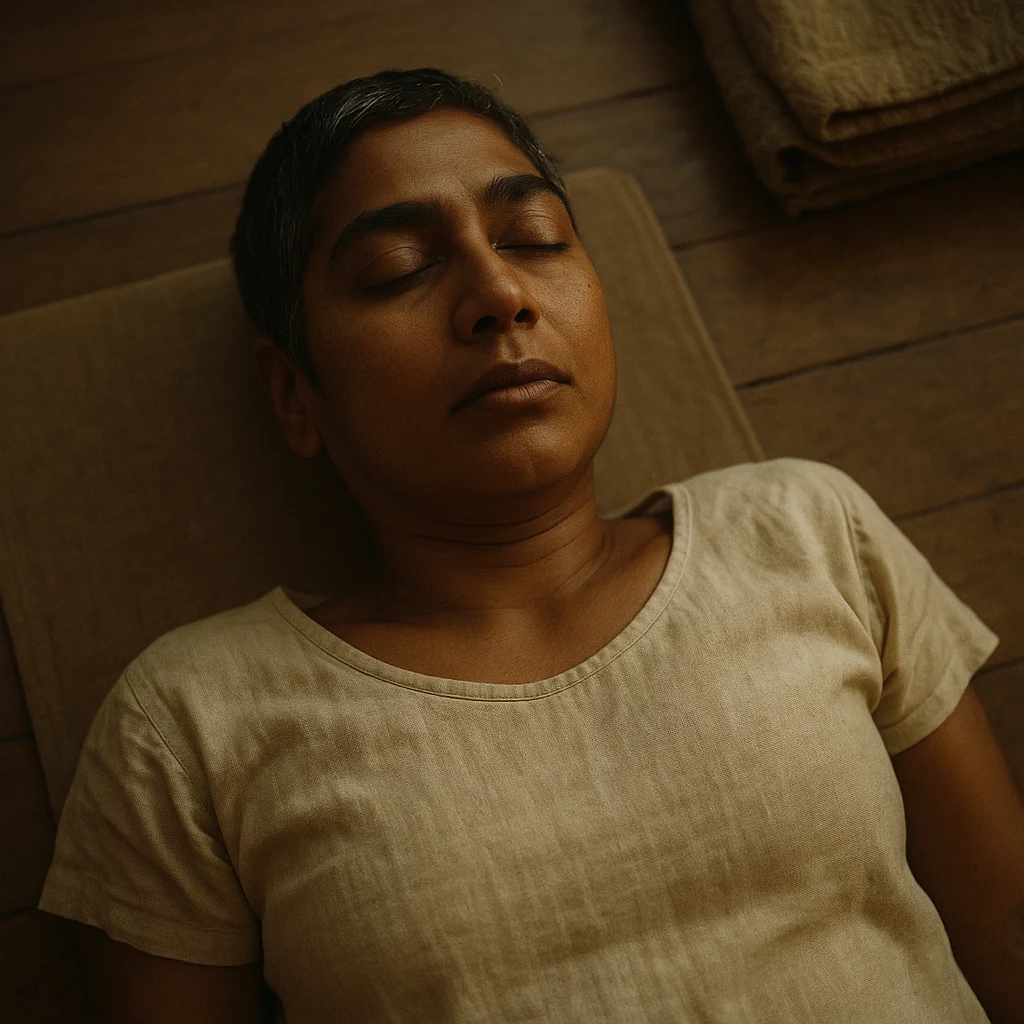

Three years ago, I sat in my therapist's office, barely able to articulate the crushing weight of anxiety that had become my constant companion. My mind raced with intrusive thoughts, my sleep was non-existent, and simple daily tasks felt insurmountable. When she suggested I try meditation, I almost laughed-how could sitting still possibly fix what felt so profoundly broken?
But desperation is a powerful motivator. I started with just five minutes a day, and within weeks, something shifted. The noise in my head quieted, my panic attacks decreased, and for the first time in years, I felt like I could other apps again.
This is my story of how meditation for mental health became not just a practice, but a lifeline-and the science that explains why it works.
Meditation for mental health reduces anxiety and depression by physically changing brain structure, lowering cortisol levels, and improving emotional regulation. Even 10 minutes daily can significantly improve mental wellbeing, with effects comparable to some medications when practiced consistently.
Meditation for Mental Health: What the Science Actually Says
Meditation for mental health is a scientifically-validated intervention that reduces symptoms of anxiety, depression, and stress by altering brain chemistry and neural pathways. The evidence isn't just anecdotal-it's measurable and profound.
Research from Johns Hopkins University analyzed 47 clinical trials involving over 3,500 participants and found that meditation programs showed moderate evidence of improving anxiety and depression, with effect sizes comparable to antidepressant medications (Goyal et al., JAMA Internal Medicine, 2014). This isn't about replacing medical treatment-it's about understanding meditation as a legitimate therapeutic tool.
- Mindfulness Meditation
- A practice of maintaining moment-to-moment awareness of thoughts, feelings, and sensations without judgment, training the mind to observe rather than react to mental content.
Harvard neuroscientists discovered that just eight weeks of daily meditation practice increased gray matter density in brain regions associated with memory, empathy, and stress regulation while decreasing density in the amygdala-the brain's fear center (Hölzel et al., Psychiatry Research: Neuroimaging, 2011). My brain was literally rebuilding itself as I practiced.
My Breaking Point: When Anxiety Took Over Everything
Mental health crises rarely announce themselves with fanfare-they creep in gradually until one day you realize you can't remember what feeling normal was like. For me, it started with work stress that metastasized into full-blown panic disorder.
I was experiencing 3-4 panic attacks per week, avoiding social situations, and relying on emergency anxiety medication just to get through meetings. According to the World Health Organization, approximately 280 million people worldwide suffer from depression (WHO, 2023), and I had become one of those statistics.
Sleep became impossible. I'd lie awake for hours, my mind catastrophizing every minor worry into a life-threatening crisis. The exhaustion compounded everything, creating a vicious cycle that felt inescapable.
That's when my therapist drew a diagram of the stress response cycle and explained how meditation could help anxiety by interrupting automatic fear responses. I was skeptical, but also out of options.
The First 30 Days: What Actually Happened When I Started Meditating
Daily meditation practice creates measurable changes in mental health within the first month by reducing cortisol levels and increasing parasympathetic nervous system activity. My experience matched what research predicts-gradual improvement punctuated by breakthrough moments.
Week one was uncomfortable. My mind wouldn't stop racing, I felt restless sitting still, and I questioned whether I was "doing it right." This is completely normal-the mind has spent years running on autopilot, and suddenly asking it to slow down feels strange.
By week two, I noticed something subtle: a tiny gap between stimulus and reaction. When an anxious thought appeared, instead of immediately spiraling, I had a microsecond where I could observe it. That space, though small, was revolutionary.
My Early Meditation Schedule
I started with meditation for beginners approach-small, consistent sessions rather than ambitious goals I couldn't maintain:
- Morning: 5 minutes of breath-focused meditation immediately after waking
- Midday: 3-minute body scan during lunch break to reset nervous system
- Evening: 10 minutes of guided meditation before bed to improve sleep quality
- As-needed: 2-minute breathing exercises during acute anxiety moments
By week four, my panic attack frequency had dropped to one per week-a dramatic improvement. I was sleeping better, responding more calmly to stressors, and beginning to believe this might actually work long-term.
The Neuroscience Behind Why Meditation Heals Mental Health
Meditation improves mental health by strengthening the prefrontal cortex (responsible for rational thinking), reducing amygdala hyperactivity (fear response), and increasing GABA and serotonin production-neurotransmitters that regulate mood and anxiety. Understanding the mechanism helped me trust the process during difficult days.
- Neuroplasticity
- The brain's ability to reorganize itself by forming new neural connections throughout life, which meditation actively stimulates through focused attention and awareness practices.
Studies using fMRI brain scans show that experienced meditators have increased connectivity between brain regions controlling attention and emotion regulation (Tang et al., Nature Reviews Neuroscience, 2015). Even beginners show measurable changes within weeks.
What fascinated me most was learning about the Default Mode Network (DMN)-the brain network active during mind-wandering and self-referential thinking. An overactive DMN is associated with depression and anxiety because it keeps us trapped in rumination. Meditation specifically quiets this network, explaining why my obsessive thought patterns began to loosen.
| Brain Region | Function | Effect of Meditation | Mental Health Impact |
|---|---|---|---|
| Prefrontal Cortex | Executive function, decision-making | Increased thickness and activity | Better emotional regulation and impulse control |
| Amygdala | Fear and threat detection | Decreased size and reactivity | Reduced anxiety and fear responses |
| Hippocampus | Memory and learning | Increased gray matter density | Improved memory and stress resilience |
| Anterior Cingulate Cortex | Attention and emotion processing | Enhanced connectivity | Better focus and emotional awareness |
| Insula | Interoceptive awareness | Increased activation | Greater body awareness and empathy |
This wasn't placebo or wishful thinking-my brain was physically restructuring itself with each practice session. That scientific validation kept me motivated during plateaus.
Practical Meditation Techniques That Actually Worked for My Mental Health
The most effective meditation techniques for mental health include breath awareness, body scan meditation, loving-kindness practice, and guided visualization, each targeting different aspects of psychological wellbeing. I rotated between techniques depending on what I needed each day.
Breath awareness meditation became my anchor during panic attacks. By focusing on the physical sensation of breathing-the cool air entering my nostrils, the rise and fall of my chest-I could interrupt the cascade of anxious thoughts. Breathing exercises like cardiac coherence specifically activate the vagus nerve, triggering the parasympathetic nervous system's calming response.
Body scan meditation helped me recognize where I held tension before it escalated into full anxiety. I'd mentally scan from toes to head, noticing sensations without trying to change them. This practice increased interoceptive awareness-the ability to perceive internal body states-which research shows is often impaired in anxiety disorders.
My Go-To Techniques for Different Mental Health Challenges
- For acute anxiety: 4-7-8 breathing technique (inhale 4 counts, hold 7, exhale 8) to immediately calm nervous system
- For depression: Loving-kindness meditation to combat negative self-talk and increase self-compassion
- For insomnia: Sleep meditation with progressive muscle relaxation to transition mind from alert to rest mode
- For intrusive thoughts: Noting practice (simply labeling thoughts as "thinking" without engaging with content)
- For workplace stress: Mini-meditations-60-second awareness breaks to prevent stress accumulation
The variety kept the practice fresh and allowed me to match technique to need. Some days required gentle, compassionate practices; others needed structured focus techniques to wrangle a chaotic mind.
The Unexpected Ways Meditation Changed More Than My Mental Health
Consistent meditation practice creates ripple effects beyond mental health symptoms, improving relationships, physical health markers, sleep quality, and overall life satisfaction. These secondary benefits often become as valuable as the primary mental health improvements.
My relationships transformed as I became less reactive. Instead of snapping at my partner during disagreements, I could pause, recognize my emotional state, and respond thoughtfully. That tiny gap between stimulus and response-the one I first noticed in week two-expanded into a spaciousness that changed how I moved through the world.
Physically, my chronic tension headaches decreased dramatically. My blood pressure, which had crept into pre-hypertension territory, normalized. I lost weight without trying because I was no longer stress-eating to manage anxiety. The mind-body connection isn't metaphorical-stress hormones have real physiological effects, and reducing them through meditation created tangible health improvements.
My sleep transformed most dramatically. Where I once lay awake catastrophizing, I now fell asleep within 20 minutes most nights. Natural remedies for insomnia like meditation work by reducing cognitive arousal-the mental hyperactivity that prevents sleep onset.
Perhaps most surprising was the increase in creativity and problem-solving ability. With less mental energy consumed by anxiety, I had more cognitive resources for creative thinking. Projects I'd been avoiding suddenly felt manageable. The mental clarity was like cleaning smudged glasses I hadn't realized I was wearing.
When Meditation Gets Hard: The Obstacles I Faced and How I Overcame Them
Meditation practice inevitably encounters obstacles including restlessness, doubt, boredom, difficult emotions surfacing, and motivation fluctuations-recognizing these as normal parts of the process rather than personal failures is essential for long-term success. I hit every common obstacle and learned to work with rather than against them.
The "I'm too anxious to meditate" paradox was my first major barrier. On high-anxiety days, sitting still felt impossible-my body wanted to move, to do something, anything to discharge the nervous energy. I learned that meditation doesn't require perfect stillness. Walking meditation, gentle movement practices, and even washing dishes mindfully counted. The essence is awareness, not posture.
Emotional releases caught me off-guard. About two months in, I started crying during meditation-not from sadness, but from emotional material I'd been suppressing finally surfacing. This is actually therapeutic, though uncomfortable. Meditation creates space for processing emotions we've been avoiding, which is part of the healing.
The motivation dips were predictable: initial enthusiasm faded around week six, and I had to consciously recommit. I treated meditation like brushing my teeth-not optional, just part of daily hygiene. Linking it to existing habits (meditating right after my morning coffee) helped automation.
I also dealt with the comparison trap-wondering if I was progressing as fast as others, whether I was "good" at meditation. Research shows meditation benefits aren't dependent on achieving some special state or experience. Consistency matters more than perfection. Every session counts, even the ones that feel scattered or difficult.
Building a Sustainable Daily Meditation Practice for Long-Term Mental Health
A sustainable meditation practice requires realistic duration targets (10-20 minutes daily), consistent timing, environmental setup, accountability systems, and integration into existing routines rather than treating it as an isolated activity. My practice evolved from sporadic attempts to a non-negotiable daily ritual through strategic habit formation.
Start smaller than you think necessary. Five minutes daily beats 30 minutes twice a week. The brain responds to consistency, not duration. I gradually increased from 5 to 20 minutes over six months as the practice became automatic.
Same time, same place leverages habit stacking. I meditate in the same chair every morning after coffee. My brain now associates that chair with meditation, making the transition easier. Environmental cues matter-create a dedicated space if possible.
Track without judgment. I used a simple habit tracker-just marking an X on calendar days I practiced. Seeing the visual chain motivated me to maintain it, but I treated missed days as data points rather than failures. Life happens; flexibility prevents all-or-nothing thinking that derails habits.
Connect to your "why." On unmotivated days, I remembered that crushing anxiety, the panic attacks, the sleepless nights. I'd rather sit for 10 minutes than return to that suffering. Connecting practice to values (mental health, being present for loved ones, showing up as my best self) provides motivation beyond discipline.
For additional structure, I joined daily wellness communities and used apps with guided programs. Having external guidance, especially initially, prevented the "am I doing this right?" spiral that stops many beginners.
How Nala Can Support Your Mental Health Meditation Journey
When I started meditation, I cycled through several apps before finding what worked. Nala offers exactly what I needed: specialized guides for different mental health needs, crisis support, and variety to prevent practice stagnation.
Nala's mental health-specific content includes 6 free SOS sessions for acute anxiety moments-the meditation equivalent of emergency relief. When panic struck, I needed immediate, effective guidance, not a library to browse. Nala provides that instant support.
The 11 specialist guides offer targeted approaches: Nala for general meditation and crisis support, Alma for hypnosis, Lila for breathwork and body awareness, Tao for mindfulness and focus, and Elena for deep body work and self-compassion. This variety meant I could match practice to need rather than forcing one-size-fits-all meditation.
The 6 multi-day guided programs provided structure when motivation wavered. Following a program removed decision fatigue-I just showed up and followed along. For work stress specifically, having targeted content made meditation feel immediately relevant rather than abstract.
At €59.99/year (or €9.99/month), with a 7-day free trial, Nala offers affordable access to comprehensive mental health meditation support. The investment in my mental health has returned exponentially more in reduced therapy costs, avoided medications, and improved quality of life.
Three Years Later: How Meditation Continues to Protect My Mental Health
Long-term meditation practice creates lasting resilience against mental health challenges by establishing new baseline neural patterns and automatic stress-response systems that persist even during difficult periods. My relationship with anxiety has fundamentally changed.
I still experience anxiety-meditation didn't eliminate it entirely, nor should it. Anxiety serves evolutionary purposes. But now anxiety is a visitor rather than a permanent resident. I notice it, acknowledge it, and it passes without escalating into panic or derailing my day.
My panic attacks decreased from 3-4 per week to roughly one every 2-3 months, and when they occur, they're less intense and shorter duration. The tools I built through meditation-breath awareness, body scanning, cognitive distancing-automatically activate during stress.
I've discontinued my daily anxiety medication (under medical supervision) and maintain mental health primarily through meditation, therapy, exercise, and sleep hygiene. This isn't the right path for everyone-some people need medication long-term, and that's completely valid-but for me, meditation became the primary intervention.
On World Health Day, I reflect on how profoundly this practice changed my life trajectory. Three years ago, I couldn't imagine feeling this stable, this present, this capable of handling whatever life presents. Meditation didn't just save my mental health-it gave me access to a life worth living fully.
Your Next Steps: Starting Meditation for Mental Health Today
If you're where I was three years ago-struggling with anxiety, depression, or overwhelming stress-meditation offers evidence-based hope. You don't need to believe it will work; you just need to try it consistently for 30 days and observe what happens.
Start with 5 minutes tomorrow morning. Choose one technique-breath awareness is perfect for beginners. Sit comfortably, close your eyes, and focus on the physical sensation of breathing. When your mind wanders (it will, constantly), gently return attention to breath. That's it. That's meditation.
Use resources designed for your specific mental health needs. Meditation for anxiety requires different approaches than depression or stress management. Guided meditations provide structure and prevent the overthinking that undermines solo practice initially.
Be patient and compassionate with yourself. Mental health healing isn't linear-there will be difficult days, practice plateaus, and moments of doubt. The research is clear: consistent practice creates change. Trust the process even when immediate results aren't apparent.
Your mental health deserves the same attention you give physical health. Meditation isn't a luxury or optional self-care-it's a foundational practice for psychological wellbeing. The 10-20 minutes daily you invest returns exponentially in quality of life, resilience, and peace.
Sources
- Goyal, M., et al. "Meditation Programs for Psychological Stress and Well-being: A Systematic Review and Meta-analysis." JAMA Internal Medicine, 2014
- Hölzel, B. K., et al. "Mindfulness practice leads to increases in regional brain gray matter density." Psychiatry Research: Neuroimaging, 2011
- Tang, Y. Y., Hölzel, B. K., & Posner, M. I. "The neuroscience of mindfulness meditation." Nature Reviews Neuroscience, 2015
- World Health Organization. "Depressive disorder (depression)." WHO Fact Sheets, 2023
- Pascoe, M. C., et al. "Mindfulness mediates the physiological markers of stress: Systematic review and meta-analysis." Journal of Psychiatric Research, 2017